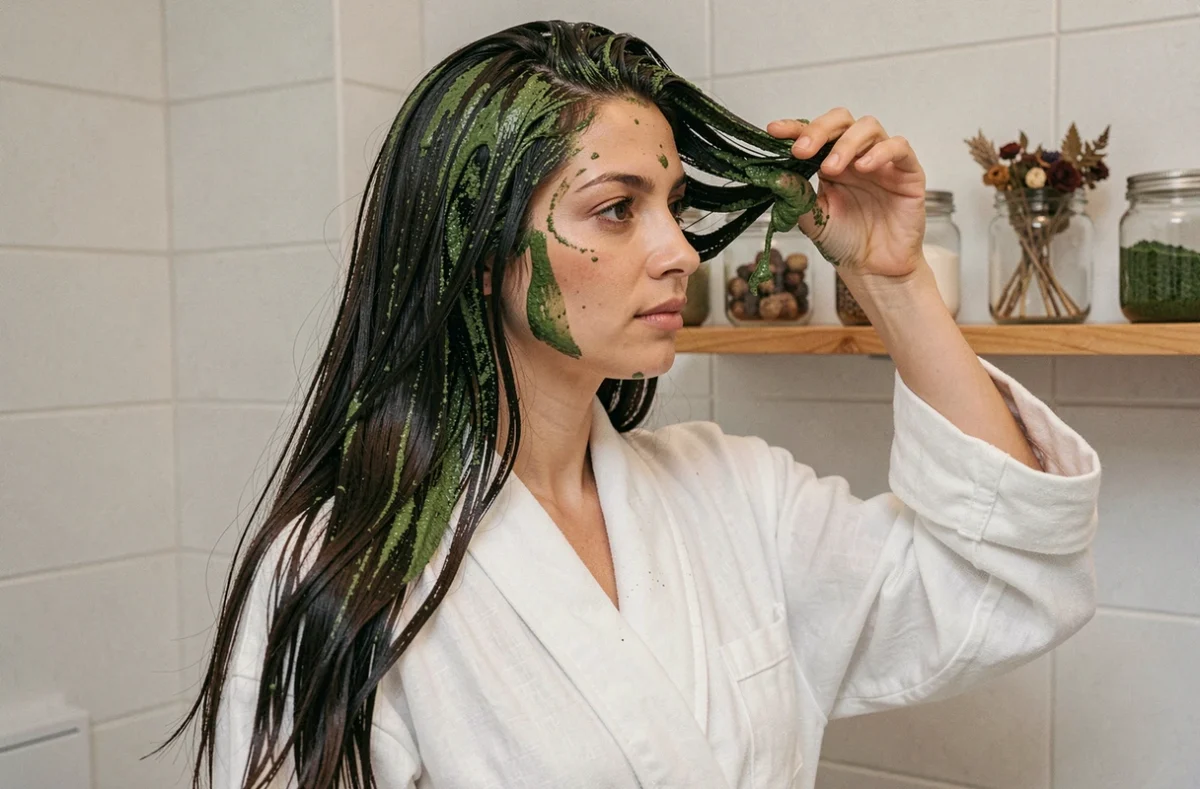
Spirulina powder is increasingly finding its place in hair care routines, driven by a nutritional profile rich in proteins, iron, and antioxidant pigments. Before expecting spectacular results, it’s essential to establish a clear framework regarding what this cyanobacterium truly offers to the hair fiber and scalp, as well as the limitations imposed by current data.
Spirulina and Hair Keratin: What the Amino Acid Profile Really Changes
The hair fiber is primarily composed of keratin, a structural protein whose synthesis depends on a regular intake of sulfur-containing amino acids (cysteine, methionine). Spirulina boasts a protein content among the highest in the living kingdom, with an amino acid spectrum that meets the needs for keratin synthesis.
The interest does not stop at proteins. Phycocyanin, the characteristic blue pigment of spirulina, exhibits documented antioxidant activity. This is significant for the scalp, where oxidative stress weakens hair follicles and accelerates bulb aging.
However, there is a gap between the biochemical richness of the product and the available clinical evidence. The scientific sources consulted do not report any clinical trials demonstrating a direct effect on hair growth or loss. Articles claiming the opposite extrapolate from studies focusing on other metabolic effects of spirulina. This discrepancy should be kept in mind when choosing a hair care product.
When considering the benefits of spirulina for hair, the distinction between nutritional potential and clinical evidence remains the most reliable filter for evaluating market promises.
Contamination and Quality of Spirulina Powder: An Underestimated Risk
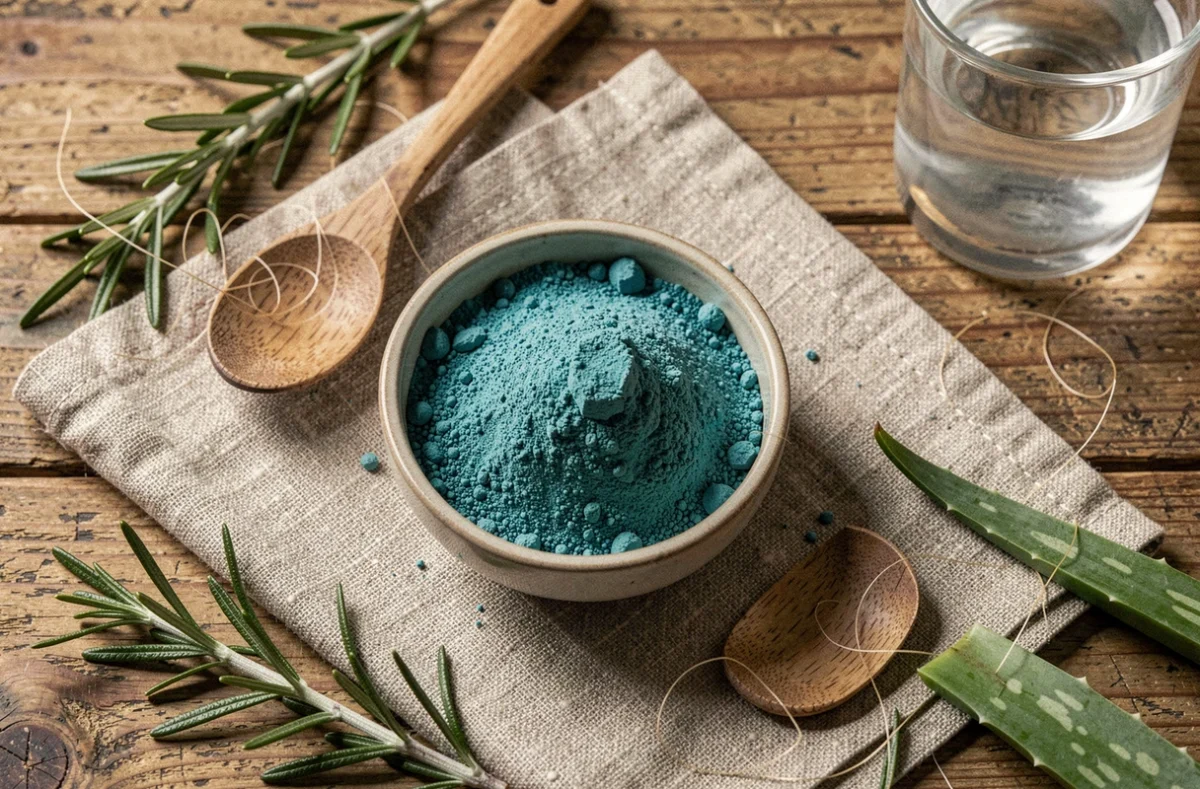
One angle that most hair care guides overlook concerns the safety of the product itself. ANSES has reported risks of contamination by cyanotoxins, bacteria, and heavy metals in certain batches of marketed spirulina. The issue affects both oral intake (dietary supplements, powder in a smoothie) and topical application, where contaminated powder comes into prolonged contact with the scalp.
Criteria to check before purchasing spirulina powder intended for hair use:
- Traceability of the production chain, including the country of cultivation and drying method (low temperature preferred to preserve active pigments)
- Available batch analyses, particularly for heavy metals (lead, mercury, arsenic) and cyanotoxins (microcystins)
- Absence of “vitamin B12” as the main selling point, as the forms of B12 present in spirulina are not necessarily assimilable by the human body, according to ANSES
This last point has a direct impact on articles attributing the hair benefits of spirulina to its complete vitamin profile. Spirulina is not a reliable source of vitamin B12, which diminishes the relevance of this nutritional argument, especially for those following a vegan diet.
Spirulina Powder Hair Mask: Formulation and Limitations of a Topical Treatment
External application in the form of a mask is the most common use in hair care. The principle involves mixing spirulina powder with a vehicle (warm water, vegetable oil, yogurt) to obtain a paste applied to the scalp and lengths.
Preparation and Application Time
Mix one to two tablespoons of powder with enough liquid to achieve a homogeneous consistency. The application time varies depending on the chosen vehicle: an aqueous base dries quickly and limits penetration, while an oily base (coconut oil, olive oil) retains hydration longer on the fiber.
The blue-green color of spirulina may temporarily tint light or bleached hair. A test on a discreet strand allows for assessing this risk before full application.
What the Mask Provides and What It Does Not
The mask acts on the surface. The proteins in spirulina can form a film on the cuticle, providing a coating sensation and a shinier appearance after rinsing. The effect remains cosmetic and temporary: it neither alters the internal structure of the fiber nor the activity of the hair follicle.
For action on the hair bulb (where growth occurs), oral intake, via a course of spirulina powder or tablets, remains theoretically more relevant. But again, without solid clinical data, caution is warranted regarding expected results.

Spirulina Powder and Hair Contraindications: At-Risk Profiles
The precautions for using spirulina go beyond simple skin tolerance. ANSES advises against spirulina consumption for individuals suffering from phenylketonuria, due to its phenylalanine content. Allergic backgrounds (especially to algae or aquatic microorganisms) represent another at-risk profile.
- Phenylketonuria: formal contraindication for oral intake
- Allergy to cyanobacteria or aquatic products: skin test recommended before any topical application
- Immunosuppressive treatment: spirulina may interact with the immune response, prior medical advice is recommended
These contraindications are rarely mentioned in articles presenting spirulina as a universal hair treatment. However, they condition the very possibility of using the product.
Spirulina powder remains an ingredient with interesting potential for hair care, provided that nutritional richness is not confused with proven efficacy. Choosing a traceable product, respecting contraindications, and adjusting expectations to the available data forms the basis for a reasoned use.