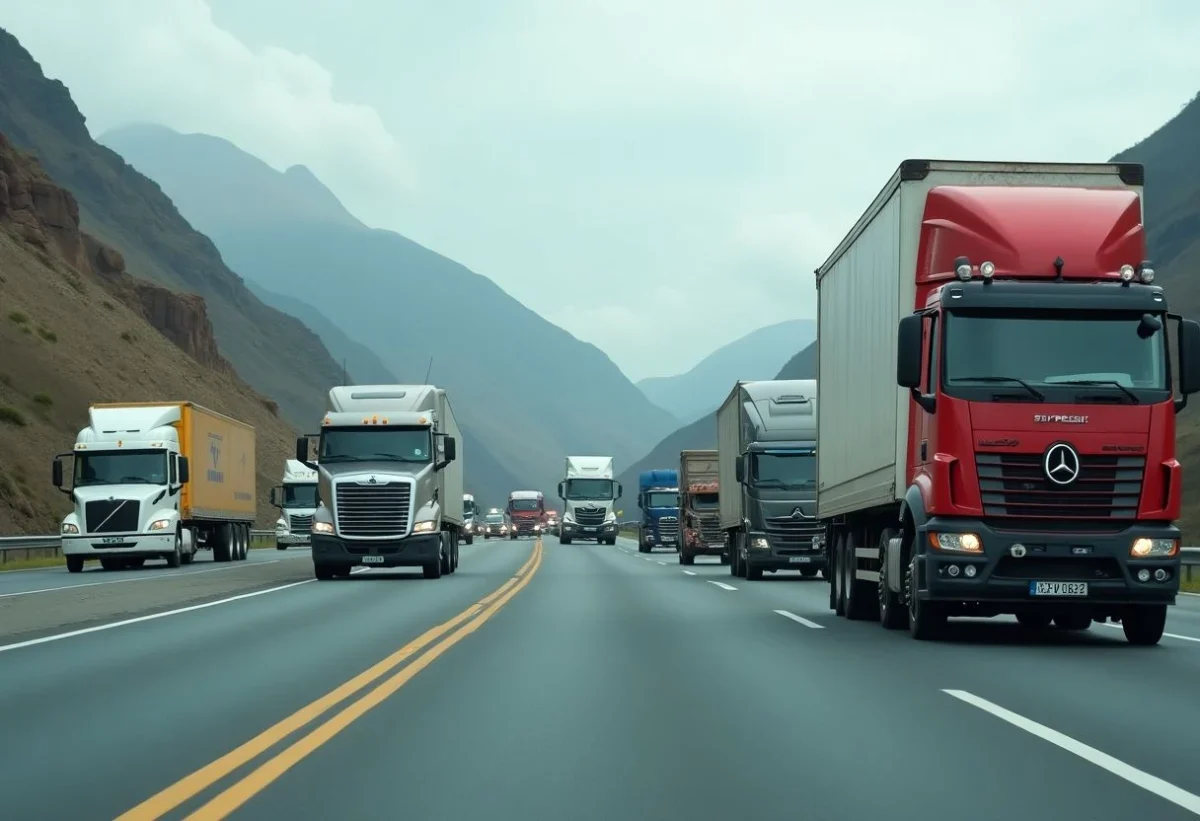
The transport of goods to England represents a significant challenge for European companies. With Brexit, the rules of the game have changed, making logistics more complex than ever. Customs constraints, new regulations, and associated costs are pushing companies to seek effective solutions to ensure the continuity of their trade with the United Kingdom. Understanding the issues related to transport to this destination has become essential for any company wishing to maintain or develop its presence in the British market.
Post-Brexit logistical challenges
Since the United Kingdom’s exit from the European Union, the landscape of goods transport has radically changed. Companies must adapt to new rules and procedures.
The main challenge lies in the increase in administrative formalities. Carriers now have to fill out a multitude of documents for each shipment, which slows down the logistics process. This increased administrative burden also has a direct impact on the cost of operations, increasing delivery times and decreasing the competitiveness of companies.
Furthermore, intensified customs checks at the borders lead to unforeseen delays. These stricter controls, necessary to verify compliance with health and safety standards, disrupt the smooth transit of goods.
Finally, the shortage of truck drivers, exacerbated by new legislation on work permits, further complicates the situation. Finding qualified professionals to carry out the transport has become a major issue.
Solutions for efficient transport
In the face of these challenges, innovative and strategic solutions are being implemented by industry players to optimize transport to England.
- Digitization of processes: The adoption of digital management systems allows for faster processing of documents and reduces human errors. Thus, companies gain in efficiency and responsiveness.
- Strategic partnerships: Collaborating with local partners who are well-versed in British regulations proves to be a valuable asset. These alliances facilitate navigation through the post-Brexit administrative maze.
- Route optimization: By diversifying transport routes, companies can bypass congestion points at the borders, thereby minimizing delays.
Economic impact and financial solutions
The upheavals resulting from Brexit not only affect logistics but also have significant economic repercussions.
Rising transport costs weigh heavily on companies’ profit margins. The need to finance these additional expenses drives companies to explore new financial strategies.
One option is to renegotiate contracts with clients and suppliers to fairly share the additional costs. Another approach involves using financial solutions like factoring, allowing companies to maintain their cash flow.
Government assistance programs are also available to support businesses in this transition, promoting adaptation to this new business environment.
The key role of the carrier to England
In this changing context, the choice of carrier to England plays a crucial role. These international logistics experts have in-depth knowledge of routes and regulations, ensuring smooth transit.
A good carrier will be able to anticipate regulatory changes and adapt their services accordingly. They will also offer customized solutions tailored to the specific needs of each company, thereby enhancing client trust and operational reliability.
Finally, by opting for experienced carriers, companies can focus on their core business while having the assurance that their goods will arrive safely.