
A morning when your bag is nowhere to be found, your keys have moved, and your shopping list is still on the table: this kind of friction eats up time and energy before the day has even begun. A few targeted adjustments, repeated in a consistent context, are enough to make everyday life run more smoothly.
“If… then…” plans to make a behavior automatic
Deciding to walk more or get your things ready the night before isn’t enough. Without a specific cue, the intention remains just that.
Implementation intentions can make all the difference. Framed as “if this situation occurs, then I’ll take this action”, they link a recognizable context to a concrete behavior. The more specific the wording, the more likely you are to follow through. “If I put my bag down when I get home, then I’ll empty my lunch box” gets results where “I’ll tidy up tonight” falls short.
You’ll find this kind of cue in resources that compile tips organized by time of day. The website Utile au Quotidien brings together practical advice for different situations, making it easier to find ideas that fit your own routine.
Here are three plans to try tonight:
- If I shut down my computer at the end of the day, then I’ll write down tomorrow’s three priorities on a piece of paper (not on my phone, so I don’t have to open a screen again).
- If I switch on the coffee maker in the morning, then I’ll pack my bag while the water heats up, combining two tasks in the same time slot.
- If I sit down on public transport, then I’ll think of three things that went well that day—a gratitude exercise that requires no equipment.
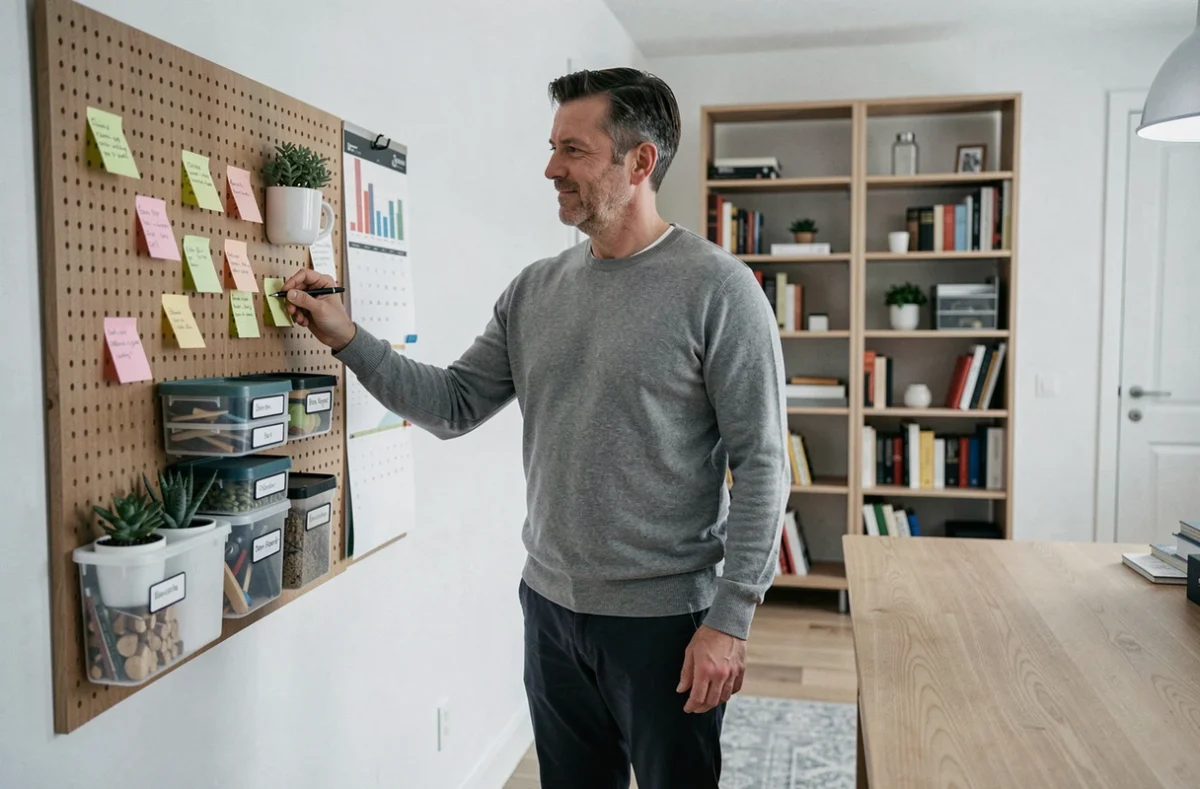
Daily routines: why it takes such different amounts of time to form a habit
Putting your keys in the same place can become automatic in just a few days. Doing a stretching session every morning, on the other hand, can take several months. How long it takes to establish a habit depends both on how complex the behavior is and how consistent the context is when you repeat it.
This has a direct practical implication. Rather than aiming for an arbitrary number of days, it helps to focus on two factors: how clear the cue is and how consistently you stick to the chosen time. A behavior tied to a clear cue (after breakfast, when you get to the office) is more likely to stick than one without a specific time-based anchor.
Pair a new behavior with an existing routine or a set time
Habit stacking means adding a new behavior to an existing habit. This approach works well, but it isn’t always the best option. If your morning routine is already packed, adding something after brushing your teeth may create friction rather than make things flow more smoothly.
In that case, scheduling the activity for a quieter time (your lunch break or when you get home from work) can work just as well, as long as you stick to the same time each day. What matters is having a consistent cue, not what it is.
Spend less time sitting: an overlooked way to support your well-being
Physical activity is often associated with structured workouts that require equipment and a dedicated time slot. Public health guidance highlights a separate point: breaking up long periods of sitting has its own benefits, independent of exercise.
Thirty minutes of walking in the morning doesn’t automatically make up for six hours straight in a chair. The goal isn’t to replace exercise, but to take regular breaks throughout the day.
Everyday habits that require no equipment or scheduling
A few small changes can break up sedentary time without affecting your schedule:
- Stand up for every phone call, creating a natural alternation between sitting and standing.
- Take the stairs for trips of fewer than three floors—a habit that quickly becomes automatic thanks to a clear spatial cue.
- Walk to nearby shops instead of driving, combining physical activity with household errands.
- Set a discreet alert every fifty minutes to stand up, stretch, or simply change position.

Sleep and peace of mind: what happens in the last hour before bed
The last hour of the day affects how easily you fall asleep and, in turn, how much energy you have the next day. It’s often overlooked in favor of a morning routine, even though it offers a very practical opportunity to make a difference.
Reducing screen exposure during this window makes it easier to wind down for sleep. You don’t have to switch everything off: leaving your phone in another room or turning on airplane mode is enough to stop the stream of notifications that keeps your brain alert.
Another helpful step is to get things ready for the next day during this time. Lay out your clothes, pack your bag, and leave your plan for the day on the table. This end-of-day ritual sends a clear signal to your body: the day is over.
Each small behavior anchored to the right moment takes a little mental load off your shoulders. After a few weeks, these habits add up, each tied to a consistent cue, making the day feel easier before it has even begun.