Reducing everyday expenses is not about a list of sacrifices. The most profitable levers lie within the very mechanics of purchasing: the timing, the channel, the combination of digital tools. Saving on daily purchases first requires measuring where the money goes, then acting on the items that weigh most heavily in the budget.
Family budget distribution: the biggest expense categories
UNAF estimates the typical budget of a family consisting of a couple and two children at 3,673 euros per month. This figure provides a useful framework for identifying real margins for maneuver.
| Expense Category | Estimated Budget Share | Optimization Margin |
|---|---|---|
| Food | About 30% | High (anti-waste, comparison, private labels) |
| Housing (rent, energy) | Heaviest category | Medium (especially energy) |
| Transport | Variable by area | Medium to high |
| Telecommunications | Moderate category | High (renegotiation, changing provider) |
| Clothing, leisure, equipment | Significant combined categories | High (second-hand, refurbished) |
Food alone accounts for nearly a third of expenses. This is the category where digital tools (apps, extensions, loyalty cards) have the most measurable effect, as the frequency of purchases is daily or weekly.
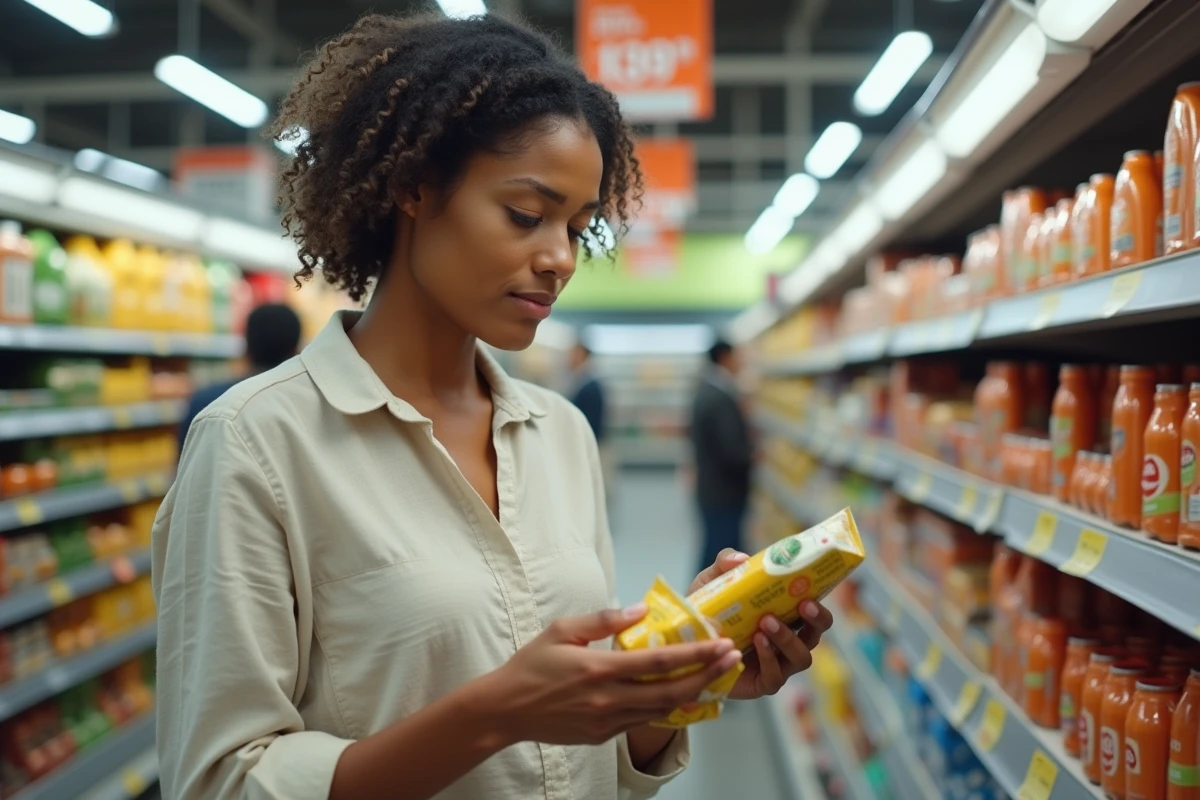
Price comparison tools between retailers allow for spotting sometimes considerable differences on the same product. Checking the price per kilo remains the most reliable reflex for comparing different packaging, and this habit weighs more than a one-time discount voucher.

Cashback extensions and budget discipline: a measured double effect
Cashback extensions installed on browsers (iGraal, Poulpeo, Joko) are often presented as simple reimbursement tools. Their real effect goes further. A Kantar study commissioned by Poulpeo, published in September 2024, shows that regular users notice a decrease in their average annual net basket for online purchases.
The explanation lies less in the percentage refunded than in the induced behavior. The extension systematically displays competing offers and available promotional codes. This mechanism encourages comparison before finalizing, and reduces impulse purchases. Therefore, the gain is not limited to the cashback itself: it includes avoided purchases.
To centralize the search for good deals, promotions, and product comparisons, specialized platforms aggregate offers by category – a directory like https://pas-cher.fr/ compiles this type of low-price oriented resources.
However, accumulating too many apps without using them regularly dilutes the benefit. Three well-mastered tools yield more than ten apps opened once a month.
Food waste apps: real effect on the shopping bill
Too Good To Go published its “Impact Report France 2024” in October 2024. The report indicates a net increase in the number of baskets saved in supermarkets and bakeries compared to 2023. Regular user households report significantly reducing their grocery budget in certain categories: bakery, catering, fruits, and vegetables.
Other French services like Phenix and Karma confirm this trend in their 2023-2024 reports. They associate it with a broader change in habits, not just opportunistic buying.
The principle is simple: recover products close to their expiration date at a reduced price. The savings depend on regularity. Recovering a basket each week from the bakery represents, over a year, a significant amount for a household that consumes bread daily.
- Too Good To Go covers supermarkets, bakeries, and restaurants – it has the widest network in France for anti-waste baskets
- Phenix offers baskets in large stores with a similar operation, but a different geographical coverage depending on the regions
- Karma focuses more on restaurants and urban local shops
The choice of the app depends on local coverage. Testing all three for a few weeks helps identify which one offers the most slots close to home.

Non-food purchases: refurbished and repair as price levers
For electronics and appliances, the price difference between a new product and a refurbished one often reaches several dozen percent. Refurbished products have gained reliability thanks to legal warranties and specialized platforms that classify products by condition (like new, good condition, fair condition).
Repair constitutes another underutilized lever. Repairing a device costs on average much less than replacing it, especially since the extension of the repair bonus in France, which covers part of the cost for certain product categories.
- Check the availability of the repair bonus before repurchasing a broken device – the amount covered varies by type of equipment
- Compare the price of refurbished products on at least two platforms before buying, as prices vary for the same model and grade
- Prefer refurbished products with a minimum warranty of twelve months to limit risk
For clothing, online second-hand and physical thrift stores allow for comparable savings. The second-hand textile market has seen rapid growth in recent years, driven by mainstream platforms.
Renegotiating recurring contracts: telecoms, insurance, energy
Recurring expenses (phone subscriptions, insurance, energy providers) represent fixed amounts that often go unnoticed. A simple call to the retention service is sometimes enough to obtain a reduction on a mobile plan or internet box, especially when mentioning a competing offer currently available.
For home or auto insurance, comparing rates each year at renewal remains the most effective gesture. The infra-annual termination, facilitated by law, has strengthened competition and thus negotiation possibilities.
For energy, the national energy mediator’s comparator allows checking if the current contract remains competitive compared to market offers. Changing energy providers is free and without interruption, which removes the main psychological barrier.
Savings on everyday purchases are rarely built through a single spectacular gesture. They result from the accumulation of repeated micro-decisions: comparing a price per kilo, activating an extension before paying online, recovering an anti-waste basket, renegotiating a contract at expiration. The reference family budget from UNAF confirms this: it is on high-frequency purchase categories that the combined levers produce the most effect.