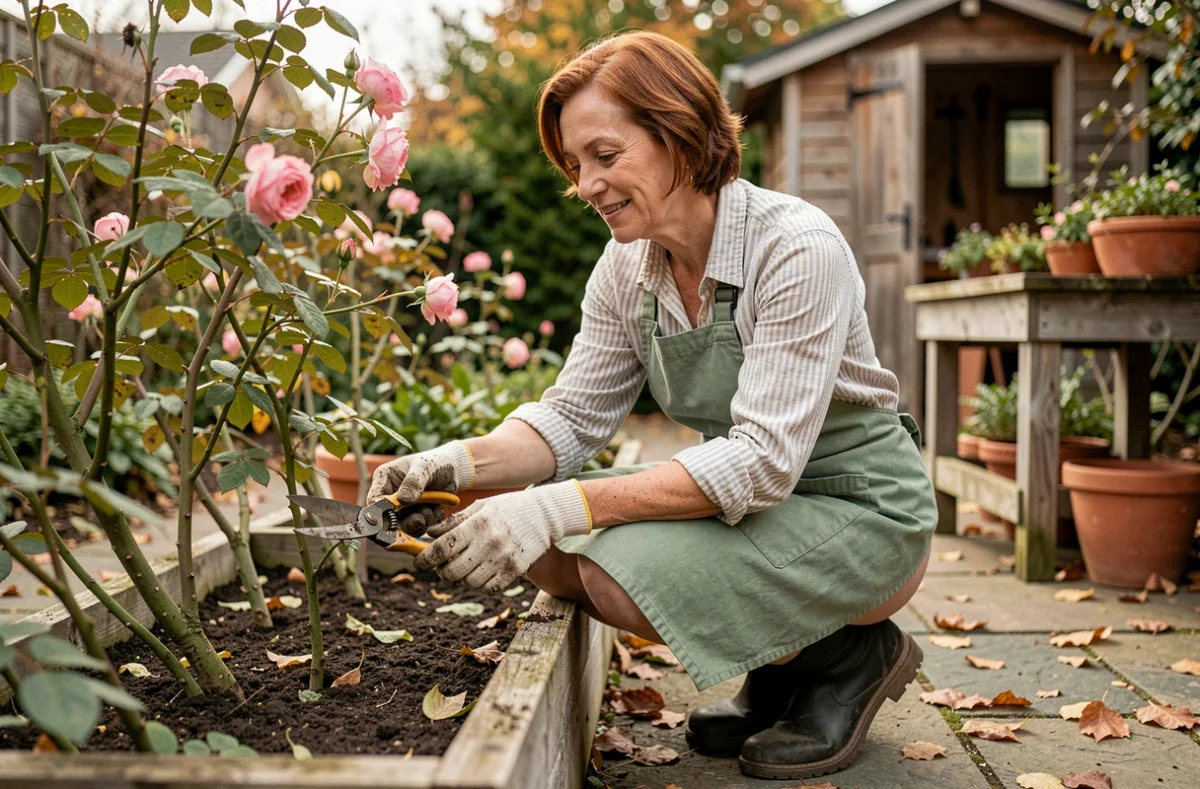
A clay soil soaked with water in November is not worked with the same tools as sandy soil in the middle of summer. This terrain constraint is often forgotten when accumulating generalist equipment that ends up rusting at the back of the shed. Maintaining a garden year-round requires choosing equipment suited to the actual tasks of each season, not just ticking off a standard list.
Rainwater Harvesting in the Garden: A Regulated Equipment
Before discussing lawn mowers or pruners, there is one aspect that most maintenance guides overlook: water. During summer restrictions, a rainwater collector changes the game for maintaining a vegetable garden or flower beds without relying on the mains.
The decree of July 12, 2024, which came into effect on September 1, 2024, regulates the use of non-potable water. Watering the garden and cleaning outdoor surfaces can be done with rainwater, provided there is a strict separation from the drinking water supply. Non-potable withdrawal points must be clearly identified.
When the installation is connected to the internal network, declaration obligations apply. You can check the equipment on Info Jardinage to identify tanks and connection systems that comply with these requirements.
In practical terms, a collector is not just a tank placed under a downspout. It requires a filter upstream, an overflow directed to a drainage point, and verification that the connection does not create any backflow to the drinking water. Failing to maintain this separation exposes one to penalties.
Pruning and Cutting Tools: Choose by Diameter, Not by Brand
Lists often include pruners, loppers, chainsaws, and hedge trimmers, as if every garden needs them all. In practice, the diameter of the branches to be cut determines the tool.
Pruner and Lopper: The Basic Pair
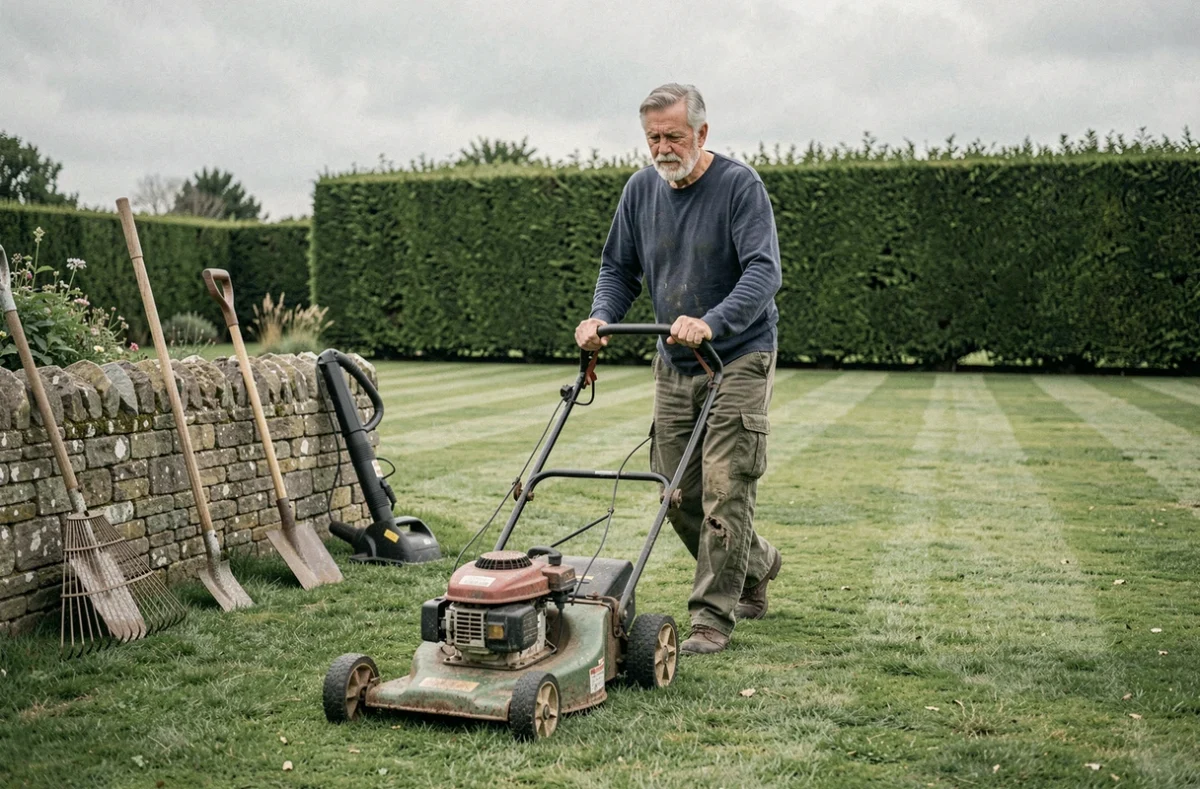
A bypass pruner handles most cuts up to about two centimeters in diameter. Beyond that, one switches to anvil or ratchet loppers, which multiply force without straining the wrists.
Stainless steel blades resist corrosion better, a point to check if pruning in autumn when humidity accelerates oxidation. Sharpening the blades at the end of the season prevents crushed cuts that promote diseases in plants.
Hedge Trimmer: Gas or Battery Depending on Hedge Length
For a hedge a few meters long, a battery model is sufficient and limits noise. For a longer length, gas models maintain an advantage in autonomy. Feedback on this point varies depending on the thickness of the vegetation and the frequency of trims.
A detail often overlooked: the hours of use for noisy equipment (mowers, hedge trimmers, blowers) are governed by municipal or prefectural decrees, not a national rule. Check your municipality’s time slots before investing in a powerful gas model that you can only use for a few hours a day.
Soil and Lawn Maintenance by Season
The soil is alive, and it is not worked the same way in March and October. Two tools span all seasons without gathering dust.
- The broadfork aerates the soil without turning the layers, preserving microbial life. It is used in spring before sowing and in autumn to decompact after rains.
- The lawn rake (or manual scarifier) removes thatch from the lawn in early spring, allowing water and nutrients to penetrate the soil.
- The digging fork remains useful for heavy tasks: moving compost, uprooting stumps, preparing a new flower bed.
A mechanical scarifier is justified for a medium-sized lawn. Below that, a suitable rake does the job without motorization or bulky storage.
Lawn Mower: The Choice That Conditions the Rest
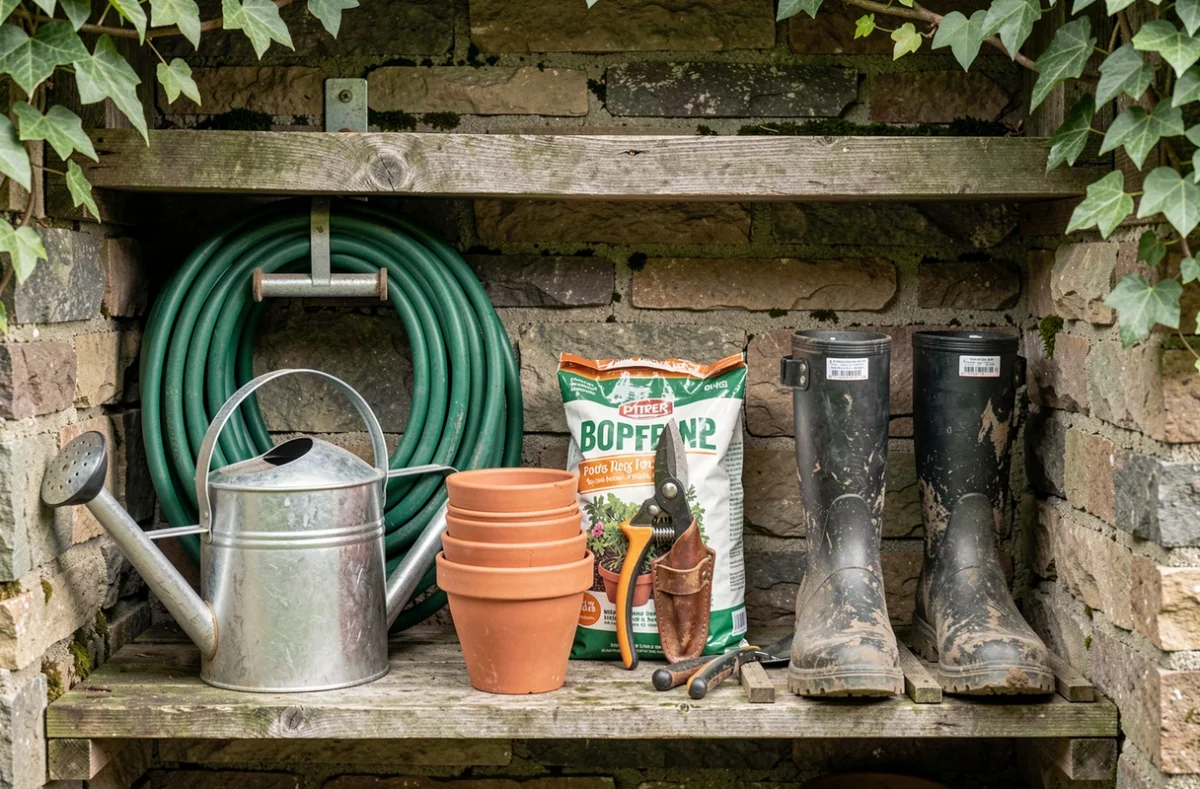
The lawn mower often represents the heaviest purchase. A mulching model shreds the grass and redeposits it on the ground, nourishing the lawn and reducing trips to the composter. In summer, mow higher to limit evaporation.
On sloped land or in narrow areas, a lightweight push mower will be more maneuverable than an oversized self-propelled model. The idea is not to buy the most powerful, but the tool that corresponds to the actual configuration of the terrain.
Watering and Plant Protection: Anticipate Rather Than Repair
Manual watering with a hose wastes water and takes time. A drip irrigation system for the vegetable garden and flower beds targets the roots, reduces evaporation, and works with a basic timer.
During heatwaves, watering restrictions multiply. Pairing a rainwater collector with a drip system allows for continued watering even when the mains are restricted. It’s an investment that pays off over several seasons.
Often Overlooked Protection Equipment
Gardening gloves are not an accessory. Thick leather gloves for pruning, lightweight latex gloves for weeding: matching the glove to the task protects the hands and improves precision.
- Protective glasses for brush clearing and using the blower.
- Hearing protection for gas equipment used for more than a few minutes.
- Kneepads for prolonged ground work, especially manual weeding or planting.
The impact of these protections on fatigue at the end of the day is often underestimated. Working without kneepads for two hours of weeding pays off the next day.
Choosing gardening equipment is not a one-time decision. It is adjusted over the seasons, depending on what the terrain actually requires. Better to have five well-maintained tools suited to your soil than a garage full of equipment that is never sharpened.