
You own a property and receive the AAH or a disability-related allowance. Every autumn, the property tax notice arrives, and the question arises: are you entitled to an exemption, either total or partial? The system exists, but it relies on specific conditions that merely receiving an allowance does not always fulfill.
Reference Tax Income: the true filter for disability exemption
Many taxpayers believe that receiving the AAH automatically grants them an exemption from property tax. The mechanism is stricter. The determining criterion is not the allowance itself, but the reference tax income (RFR) of the household.
Specifically, the tax administration checks whether the RFR from the previous year remains below a ceiling set each year. This ceiling varies according to the number of tax shares of the household. An AAH recipient living alone and a couple with children do not fall under the same threshold.
Articles 1390 and following of the General Tax Code govern these property tax exemptions for disabilities by linking them to provisions for low-income individuals. In other words, it is the modesty of resources, combined with the disability situation, that triggers the right.
You may receive the AAH and exceed the RFR ceiling if your spouse has significant income. In this case, the exemption does not apply, even if your disability is recognized.
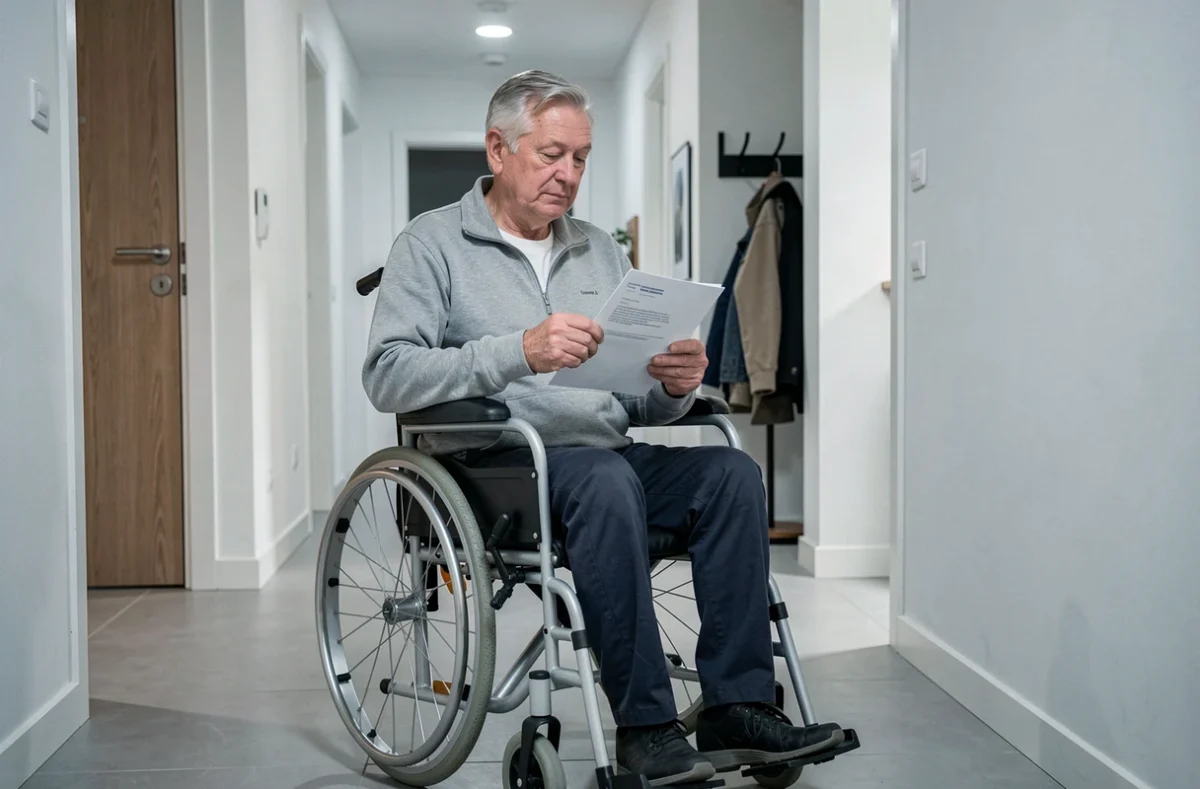
Property tax and disability: who can claim total exemption
The total exemption from property tax applies only to your primary residence. A rental property or a secondary residence does not benefit from any relief related to disability.
Three profiles can claim it, provided they meet the income ceiling:
- Recipients of the Disabled Adults Allowance (AAH), provided they occupy the property as their main residence and do not exceed the applicable RFR threshold
- Holders of the Old Age Solidarity Allowance (Aspa) or the Additional Disability Allowance (Asi), according to the same resource criteria
- Individuals over 75 years old under the condition of modest income, a distinct case often confused with the disability provision
One often overlooked point: only the owner or usufructuary of the property can benefit from the exemption. If you occupy a property owned by a relative, your disability status does not allow for a reduction in their property tax. It is the owner’s tax situation that is examined.
Cohabitation and occupancy conditions
For the exemption, you must occupy the property alone, with your spouse, or with people who are themselves fiscally dependent. Hosting a third party whose income exceeds the ceiling can jeopardize the benefit of the exemption.
This detail often traps households where an adult child, still fiscally dependent, begins to earn wages that raise the household’s overall RFR.
Tax relief, exemption, TEOM: three lines not to confuse on your notice
Your property tax notice contains several lines, and not all react the same way to an exemption.
The exemption removes the municipal and departmental portion of the property tax on your primary residence. You no longer pay these amounts. However, the household waste collection tax (TEOM) remains due. Service-Public.fr explicitly reminds us: even in the case of a total property tax exemption, the TEOM always appears on the notice and must be paid.
Tax relief is another mechanism. It does not eliminate the tax; it reduces it. Some taxpayers over 65 years old, for example, benefit from a flat-rate tax relief, distinct from the disability-related exemption.
Why does this distinction matter? Because a taxpayer who receives a zero-euro notice on the “property tax” line may believe that everything is settled, while they still owe the TEOM. Not paying the TEOM incurs the same penalties as for a regular tax.

Claim and procedures with the tax center
The disability-related exemption is generally applied automatically by the tax administration, based on information exchanged between the CAF and the General Directorate of Public Finances. In practice, oversights or errors occur.
If your property tax notice does not reflect the exemption you believe you are entitled to, you can file a claim with your tax center.
To prepare your file, you generally need:
- Your latest income tax notice, which mentions the RFR
- A proof of receipt of the AAH, Aspa, or Asi (CAF or MSA certificate)
- A proof of occupancy of the property as a primary residence (energy bill, insurance certificate)
The procedure can be done online via your personal space on impots.gouv.fr, in the “Secure Messaging” section, or by mail to the personal tax service to which your property belongs.
Loss of entitlement and transitional period
If you lose the benefit of the exemption (because your RFR exceeds the ceiling in a given year, for example), the system provides for the maintenance of the exemption for two years. After this transitional period, a reduction on the rental value takes over, gradually reducing the amount owed rather than abruptly reinstating it.
This smoothing mechanism prevents a slight increase in income from immediately resulting in a full-rate property tax notice. It remains little known to the affected taxpayers, who sometimes discover too late that they could have benefited from it.